Experience vs. Certifications: How They Work Together
By Testara Team
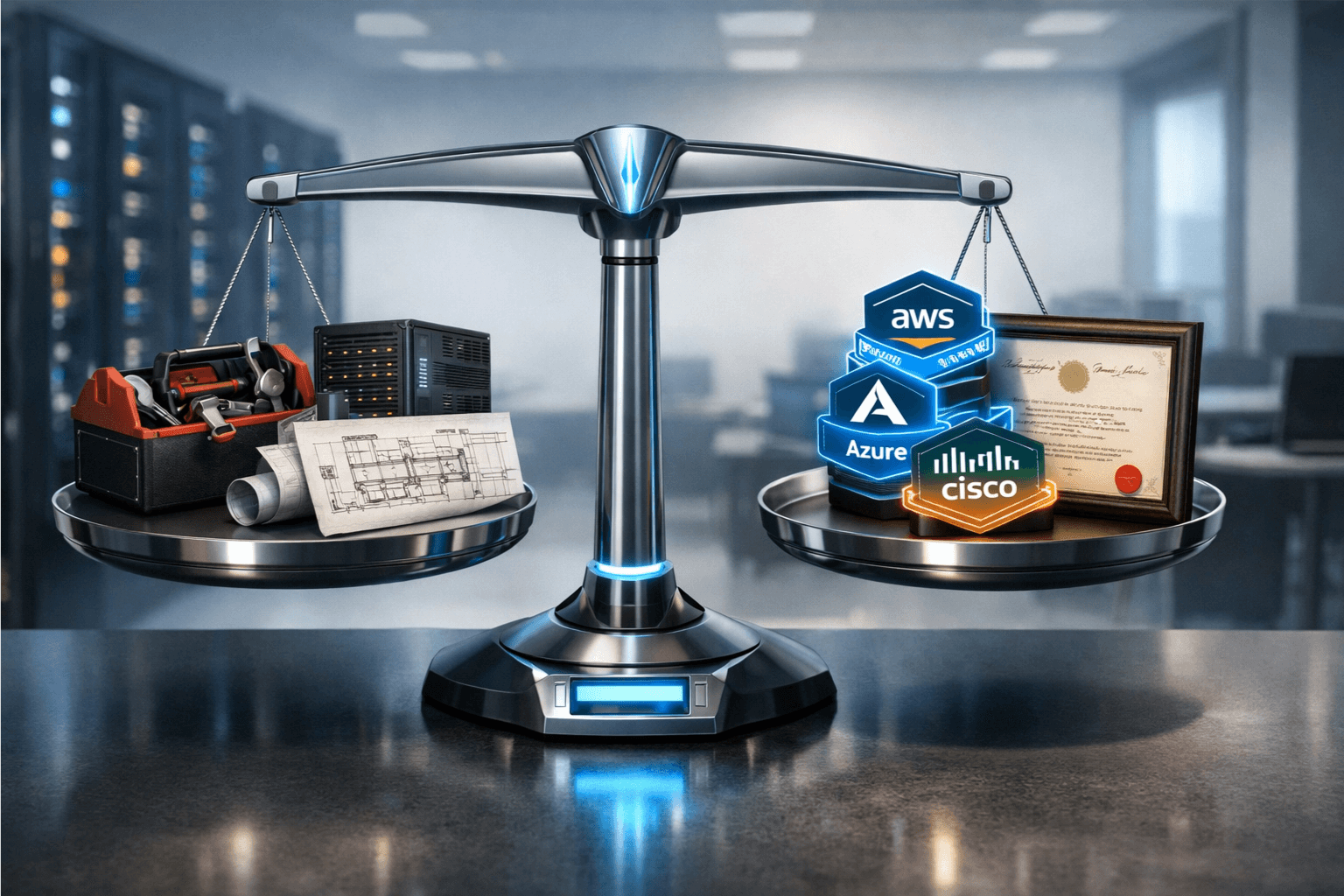
Experience and certifications are not interchangeable. Experience records work you have performed in a particular context. A certification shows that you met an issuer’s assessment standard for a defined scope at a point in time.
What a Certification Shows
A current certification can show that you passed an assessment tied to the issuer’s published objectives. It may also satisfy a stated employer, partner-program, or regulatory requirement.
It does not prove that you have operated the technology in production, handled a particular incident, led a project, or meet every skill in a job description.
What Experience Shows
Experience can provide evidence of decisions, constraints, collaboration, troubleshooting, and outcomes over time. Its relevance depends on the work: years spent on one system do not automatically demonstrate a different platform or role.
Describe experience specifically. “Maintained infrastructure” is weaker than a truthful explanation of the system, your responsibility, the decision you made, and the observed outcome.
Avoid false equivalence
A lab is practice, not production experience. It can still be valuable evidence when you label it honestly and explain what it did and did not test.
Read the Role Requirements
Employers use different screening and interview processes. Do not assume every résumé is ranked by the same applicant-tracking rule or that a certification automatically passes a filter.
For each target role, record:
- required and preferred credentials;
- required technologies and responsibilities;
- experience level and examples requested;
- whether a portfolio or technical exercise is part of the process.
Prioritize explicit requirements and prepare truthful evidence for each one.
Build Evidence without a Job Title
When you lack role experience, build legal, bounded examples:
- complete a vendor lab and document your decisions;
- build a small project using non-sensitive sample data;
- troubleshoot a deliberately broken lab and record the process;
- contribute documentation or code to a project that welcomes contributions;
- volunteer only where you can protect the organization’s systems and data.
Never present a tutorial you copied as independent production experience. Explain what you changed, tested, learned, and would do differently.
Keep Both Current
Certification renewal varies by issuer and credential. Experience can also lose relevance when the role changes. Check current documentation, revisit old assumptions, and practice newer tools in an appropriate environment.
There is no defensible percentage split between “certifications” and “experience” for a career stage. The right balance comes from the role’s requirements and your actual gaps.
Frequently Asked Questions
Can I get an IT job with certifications and no experience?
It is possible, but no credential guarantees an interview or job. Labs and projects can add evidence of practice, while employers decide whether that evidence meets the role’s requirements.
Does experience make certifications obsolete?
Not automatically. Some roles or programs require a current credential; others prioritize demonstrated work. Check the actual role and the issuer’s renewal policy.
Which is better for a career changer: labs or certifications?
They answer different questions. A certification assesses a published scope; a lab or project shows how you approached a task. Use the combination that matches target-role requirements.
What do hiring managers value more?
There is no single hiring-manager preference. Read current job descriptions, talk to employers where possible, and prepare evidence for every required skill and credential.
Conclusion
Use certifications to validate a relevant published scope and experience to show how you work in context. If one side is missing, build honest evidence for that gap rather than claiming that a badge automatically replaces experience or that years alone prove current skills.
Practice a Defined Skill
Use practice questions to find gaps, then apply the underlying skill in an appropriate lab.
Browse Practice Tests